On this page
AI Search for SaaS Companies: How to Get Your Product Mentioned in ChatGPT
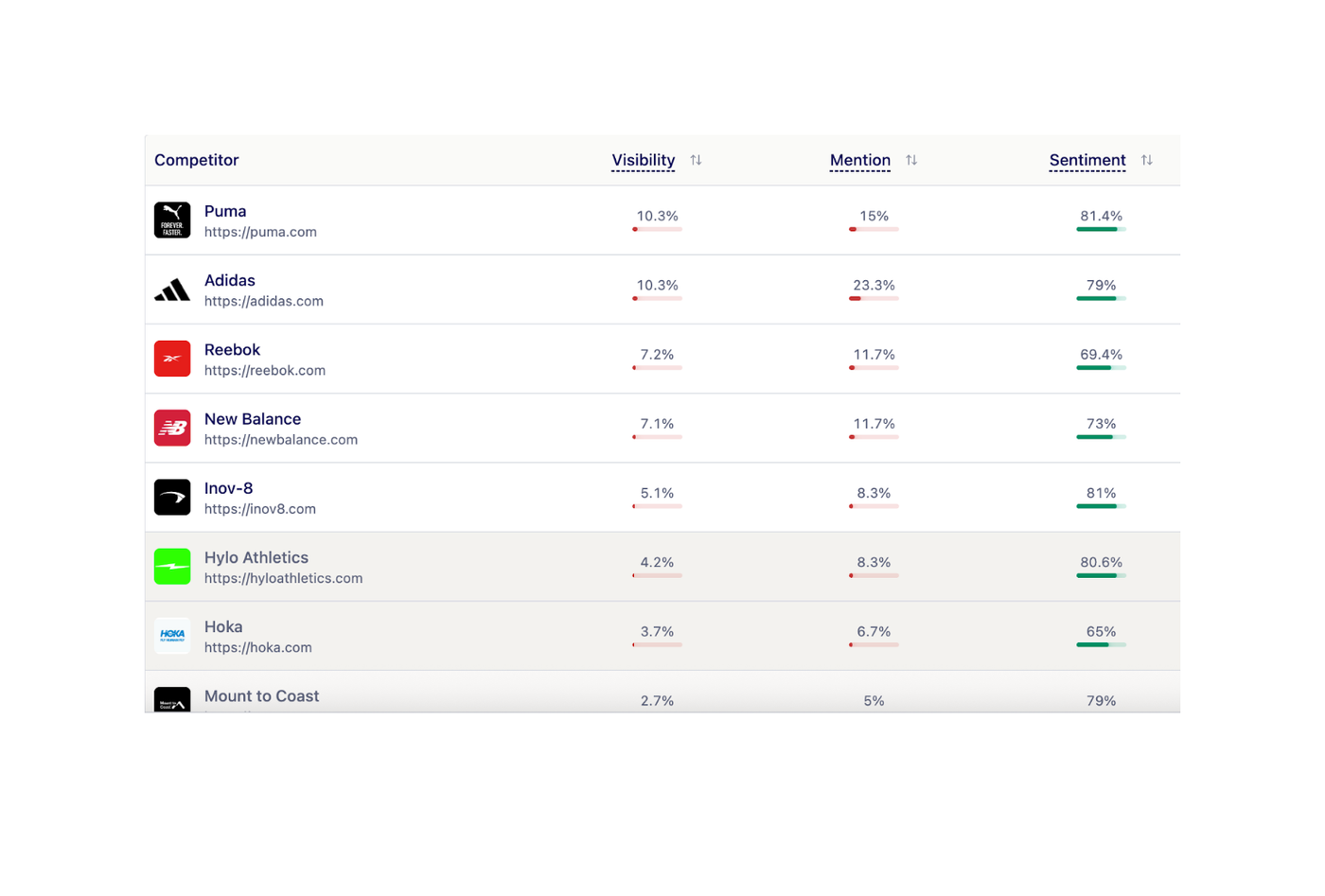
Trick your SaaS product’s share of voice in AI search versus competitors - Upsearch visibility dashboard
Something has quietly shifted in how software buyers find new tools and a lot of SaaS companies are still catching up to it.
A few years ago, a potential customer would Google "best CRM for startups" and scroll through a list of links. Today, a growing share of those same buyers just open ChatGPT and ask. What comes back isn't a list of links. It's a short paragraph naming two or three specific products, written confidently, with no obvious way to push back or dig deeper. That response shapes the shortlist before the buyer has visited a single website.
If your product is in that paragraph, great. If it isn't, you may not get a second chance. The buyer isn't going to go looking for you.
This guide covers what AI search for SaaS companies actually looks like right now, what drives it, and how to improve your position in it.
Why AI Search Hits Different for SaaS
SaaS buying is question-driven by nature. Buyers aren't window shopping; they have a specific problem and they want to know which tool solves it. That maps almost perfectly to how people use AI assistants.
"What's the best tool for managing customer onboarding?" "Which analytics platform works with Shopify?" "Is there a cheaper alternative to Salesforce for a 10-person team?" These are high-intent, specific queries and ChatGPT answers them with specific product names. The confidence of that answer carries weight that a sponsored search result doesn't.
The other thing worth noting: SaaS categories are comparatively well-defined. There are only so many "best CRM" or "best project management tool" answers. That means the stakes for whether you're in the response or not are unusually high.
For further context on AI’s impact on B2B software buying. Forrester has covered this shift in detail.
What Drives AI Search Visibility for SaaS Products
No one has a definitive answer here, the model providers don't publish their weighting logic, and anyone claiming otherwise is guessing. But a few patterns come up consistently enough to be worth acting on.
Your web footprint
ChatGPT's training data is essentially a snapshot of the internet. Products with a broad, credible presence across review platforms, documentation, press coverage, and community discussions show up more reliably than products with a thin footprint even when the thin-footprint product is objectively better. Unfair, but that's how it works.
Third-party signals
G2, Capterra, TrustRadius, Reddit threads, Stack Overflow answers, industry newsletters these are the kinds of sources AI models treat as trustworthy because they're harder to game. User-generated content especially. A hundred real reviews carry more signal than a polished marketing page.
Content that answers questions directly
If your website is mostly positioned around brand values and capability claims, that's not what AI models pull from. What they pull from is content that actually answers questions, comparison pages, use-case breakdowns, FAQs, how-to guides.
The closer your content looks to the answer someone would want, the more likely it gets cited as one.
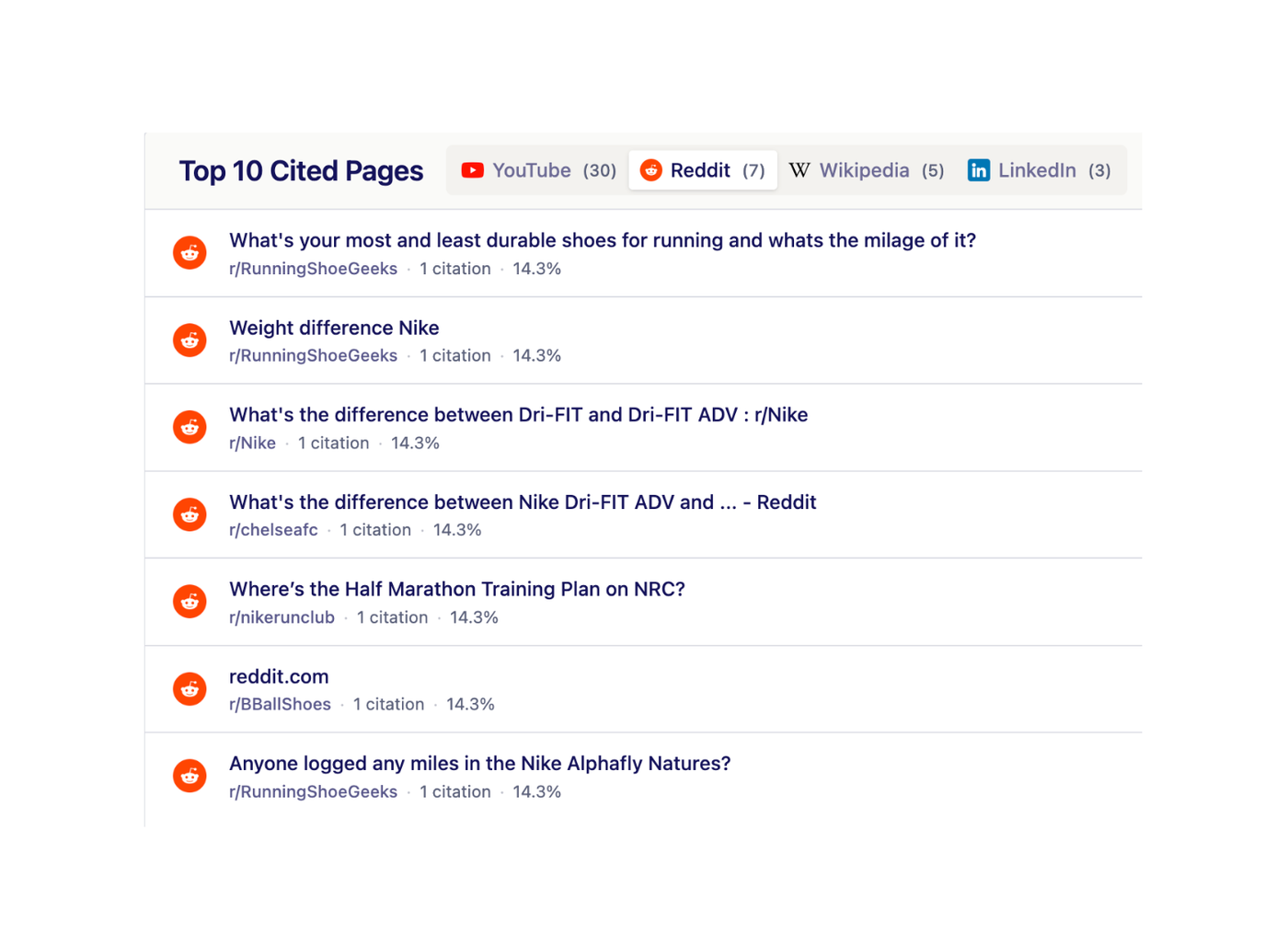
Upsearch citation tracking: see exactly which external sources AI engines cite when recommending products in your category
8 Ways to Improve Your SaaS Product's AI Search Visibility
1. Write for the question, not the keyword
AI search queries are conversational. "Best tool for X" and "how do I solve Y" are closer to what buyers actually type than the short-tail keywords traditional SEO optimises for. Write content that answers those questions directly, with your product as a natural part of the answer.
2. Get serious about review platforms
G2, Capterra, Product Hunt, TrustRadius these platforms are well-represented in AI training data. It's worth actively encouraging reviews, responding publicly to feedback, and keeping your profile accurate. A stale profile with five old reviews actively works against you.
3. Own your comparison content
Buyers ask comparison queries constantly. If you don't have pages that address "your product vs competitor X", someone else, a review site, a competitor, or a journalist will own that content instead. You want to control how that comparison is framed, and you want to be cited as the source when the question comes up.
4. Show up in community discussions
Reddit, LinkedIn groups, niche Slack communities — AI models with live retrieval (Perplexity especially) pull from these regularly. Being genuinely helpful in relevant communities builds organic mentions that feed directly into AI-generated answers. This isn't about spamming product links; it's about being the person who gives the useful answer.
5. Build deep, honest documentation
Well-structured product documentation reads as authoritative to AI models. If someone asks "how does [your product] handle X", and your docs have a clear, accurate answer, that's a source worth citing. Thin or outdated docs are a missed opportunity.
6. Keep your content fresh
Particularly for tools like Perplexity that use live retrieval, recency matters. A detailed comparison article from two years ago especially if your product has changed significantly can actively misrepresent you. Regular updates matter, not just for SEO but for accuracy in AI responses.
7. Use structured data
SoftwareApplication schema, FAQ schema, HowTo schema these help AI crawlers parse your content accurately. It's not a silver bullet, but it's low-effort and useful.
8. Measure what's actually happening
All of this is hard to optimize if you're not tracking it. Manually running 20 prompts in ChatGPT every week doesn't scale and it doesn't give you competitive context. A platform like Upsearch runs this systematically across ChatGPT, Perplexity, Gemini, and Copilot, and surfaces your share of voice versus competitors so you can see what's working and what isn't.
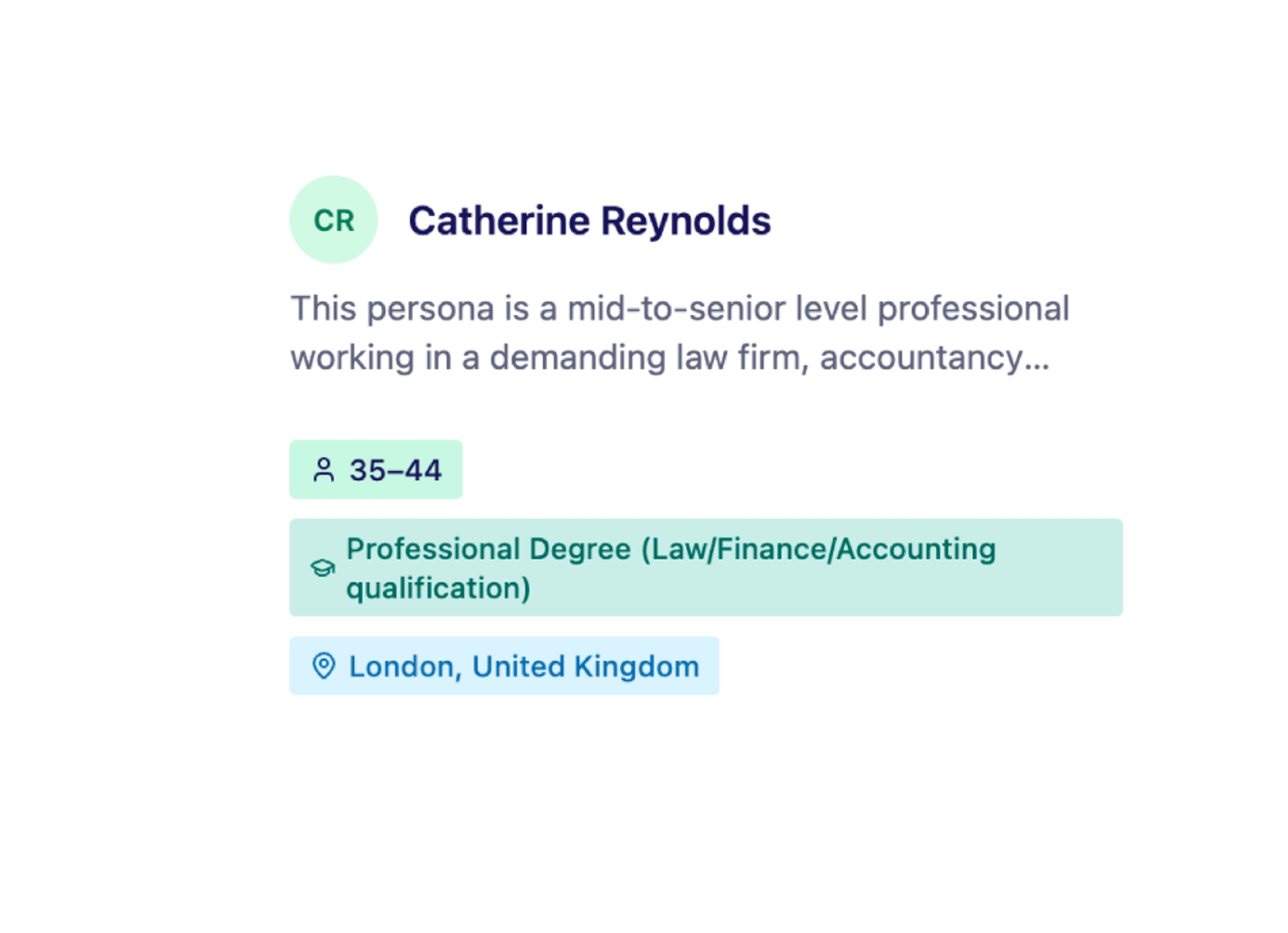
Upsearch marketing personas: simulate how different SaaS buyer profile search for solutions in AI engines
SHARE OF VOICE — ROUGH BENCHMARKS
- Under 10% — Largely invisible. The priority here is building foundational presence: web footprint, reviews, community. Content strategy comes second.
- 10–30% — You're showing up, but inconsistently. Comparison pages and targeted answer-style content tend to move the needle fastest at this stage.
- 30–60% — You're a credible player in your category. The focus shifts to dominating specific sub-categories and use cases rather than broad coverage.
- 60%+ — You're the default recommendation. At this point it's about protecting position: watching competitor moves, keeping content updated, monitoring sentiment.
Common Mistakes That Hurt AI Visibility
- Ignoring UGC entirely. Review platforms and community discussions feel low-glamour compared to a polished content strategy, but they're often what AI models actually cite. Don't ignore them.
- Only tracking your own brand name. The more valuable signal is category-level queries "best tool for X". That's where real discovery happens, and where most brands have the biggest gaps.
- Letting old content go stale. Content that no longer accurately represents your product is a liability in AI search, not just a missed opportunity.
- No measurement baseline. It's genuinely hard to know what to work on if you don't know where you stand. Get a baseline before you build a strategy.
AI search for SaaS companies isn't coming, it's already here, and it's already shaping buyer decisions. The good news is that most of the levers that improve AI visibility are things worth doing anyway: better content, more community presence, stronger review profiles. The difference is doing it with visibility data, not just instinct.
Newsletter
Get the next AI search signal in your inbox.
Short, useful updates on AI visibility, citations, prompts, and category positioning.
No spam, unsubscribe anytime. See our privacy policy.
Related reading
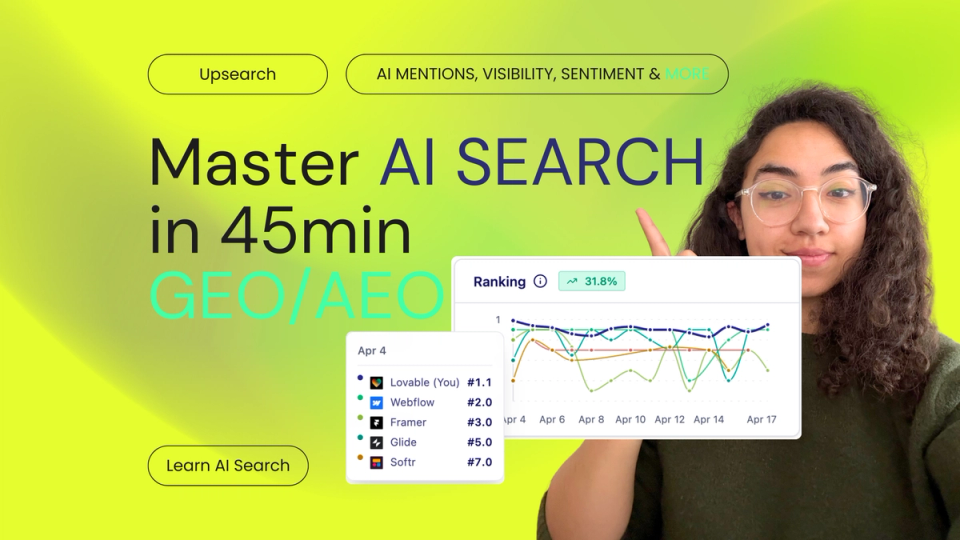
Masterclass in AI search
A video-based guide to advanced AI search optimization concepts.
The New SEO You Can't Afford to Ignore
The era of the blue link is giving way to the age of AI synthesis. Discover the architectural foundations of generative engine optimization and learn how to optimize your business for ChatGPT, Claude, and Gemini with Upsearch.
The Metric That Will Define Marketing in 2026
In 2026, blue search links are taking a backseat to generative engine answers. Here is how advanced AI brand visibility tracking helps your business dominate the conversational web without relying on short-lived hacks.
From insight to execution
Track how AI engines actually describe your brand.
Upsearch helps teams monitor prompt visibility, competitive positioning, and citations across the answer engines that now shape real buying journeys.